Pages

Showing posts with label Naked Writing. Show all posts

Sunday, December 22, 2019

Monday's Inspiration: What to Give the Writer Who Has Everything (In Their Imagination).

Have a writer on your Christmas gift list? Stuck for ideas? That’s not surprising, considering you’re dealing with a person who can have anything he or she wants – in their imagination, of course!
But buying for writer friends or family needn’t be a chore. And it needn’t be expensive, either. Of course, the latest word processing programmes, computer technology, a library full of books or a year’s rental on a retreat to a villa in France, would all be welcome gifts. Bear in mind that the latter could be very pricey indeed, because most of us writers are broke much of the time so you’d definitely have to throw in air fare and stock the place with food.
But for more realistic purposes, here are a few writer pleasing ideas.
1)     Fancy pens, pencils, cute notebooks, or other desktop gadgets. Sure, we know we’re in the age of high tech, but there’s nothing like the allure of a clean, virginal page or a fancy new gel pen.
 
2)     A really good diary with at least a page per day for notes. Or more than a page, to help keep track of word counts, deadlines, book signings, talk events, submission dates, etc.
 
3)     The online version of The Writer’s Market.
 
4)     The online version of Writer’s Digest
 
5)     A comfy cushion for the desk chair – you’d be amazed just how numb one’s posterior can get after a few hours of typing madly, butt in chair….
 
6)     One of those little desk puzzles, to give the brain a break from words. Careful with the choice, though – nothing too difficult. Writers are all too familiar with failure, and not being able to do the Rubik’s Cube, for example, can begin a slow slide into depression as fast as any rejection letter.
 
7)     A pair of those woolly fingerless gloves, for typing when the power is out – or has been cut off – and there’s no heat.
 
8)     Woolly socks with tops that will fit over flannel pajama bottoms.
 
9)     Flannel pajama bottoms.
 
10)  A gift card for Starbucks or Tim Horton’s, so that your writer won’t get black looks after sitting in the warm cafĂ© for hours, typing without buying…..


11)   Probably the very best gift for a writer costs nothing: Time. Yes, time to write without interruption is such a gift! Be a friend. Don’t take offence when your writer buddy rolls her eyes at your suggestions that the two of you go out, when you know she’s on deadline. Offer to take the kids for a couple of hours, cook a meal, pick up groceries, dry cleaning, kids from school. Don’t talk for hours on the phone. Listen when she needs a sounding board, otherwise give her some space.
 
Trust me, she or he will eventually emerge from the writing cave, eager and ready for human interaction again……one the writing is done. Until the next book, of course….


Thursday, December 14, 2017

Have You Looked At What's In Your 'Ideas' File Recently?


My (writing) life was in danger of becoming an unfinished symphony.
I’m an Aries, and we love to start things. Unfortunately, finishing isn’t a strong point. I have sweaters, quilts, paintings, gardening projects….well, you get the picture. All unfinished.
Perhaps more importantly, I have a huge file on my computer of novel ideas and, even more alarming, about seven novel manuscripts in various stages of completion.
And then I signed up, as I do every year, for Nanowrimo. You know what I mean, that challenge where you try to sweat out 50,000 words, or an entire novel, in a month. Self-inflicted torture.
And I went through my ideas file to try to figure out what I’d like to work on. And found two mss that had been done to first draft in previous Nanos. And then abandoned like unwanted children.
Oh, dear, my poor babies.
Because they were actually good children, interesting plot lines, characters who sobbed on my shoulder when I told them they’d have to wait to tell their stories.
I felt like a monster.
So, I quit Nano and dusted off a couple of these unfinished stores and got to work.
And it’s going well. The poor things are so happy to see me, they just blossom with words.
My unfinished symphony of a (writing) life was highlighted by talking to a friend who was clearing out all sorts of things. “If anything happened to me, I know my kids and grandkids would just dump this stuff,” she said philosophically.
Uhmm, I started wondering what my kids would do – or think – about a series of unfinished murder mysteries with a couple of hot sex scenes thrown in.
Much better solution is to finish them (the books, not my kids) and get them out to take their chances in the big world.
As for the unfinished craft projects, well, who knows what fate awaits them?
So, have you checked what novel ideas are lurking in your 'ideas' or 'strays' file? You might find almost finished gold, right there!


Wednesday, September 23, 2015

Writing Contests: For Winners, Or a Waste of Time?

*This is a repeat of a post I've run before, which always seems to strike a chord with other writers...

As writers our main aim is to get our work accepted by a publisher, right? And it’s hard enough sending out all those query letters and neat little packages of partials and synopses, without being bothered sending stuff off to some group with an odd-sounding name who’ll take a look at your work and — gulp! — maybe tell you it’s no good. Heavens, after all, we can get letters from publishers telling us the same thing, and less publicly!

If we get a nice letter praising our work from these contest judges, or better yet, our names appear as finalists or winners, so what? I mean, it’s not like being published, is it?

And contests cost you money, too. So why bother?

Now, gather round, all you ambitious writers, and listen up.

Contests can provide you with a showcase for your work, a chance to bring your work before judges who are also editors, agents, or published writers in their other incarnations. And you don’t have to win the contests to be a winner, either. Many writers will tell about their experiences of being contacted by editors or agents who read their contest submissions and were impressed enough to ask to see the whole manuscript.

So, is it really worth going to the trouble of seeking out contests, packaging up your precious work
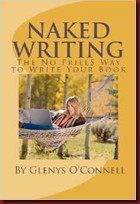
Naked Writing: The No Frills Way to Write Your Book
and sending it off? Many writers think so. Here are some positive viewpoints:

“I entered the Iowa Romance Novelists’ Query and Synopsis contest last year and was a finalist. It was advantageous in many aspects and I’m going to enter a few more this year as a result of my experience with the contest,” says writer Dawn Tomasko, “Contests can open doors for writers. It’s a tight, competitive market and if an editor or agent notices your work through a contest so much the better. It’s one way to get a foot in the door. I very much liked reading the different judges’ responses to my work (I had included the first 30 pages as requested) and not only was the feedback helpful to point out good and bad things in my work, but the differences in their opinions underlined the fact that fiction is SO subjective.”

Dawn is now on her third novel, and adds the contest final as a credit in her query letters alongside her publication credits. “I advocate contests wholeheartedly,” .

Author Laurie Alice Eakes is a first-rate example of how a contest can boost a writer into committing to her craft — and the successes that follow. “In 1993, I won my first writing contest,” Laurie Alice said. “After that, with the encouragement of writer friends and business associates, I got serious and finished my first true attempt at a readable novel. My first sale was actually a nonfiction book entitled Virginia Wine, A Tasteful Guide, published in 1997. In 1999, while I was in grad school at Virginia Tech, I contracted my first novel with Awe-Struck E-Books.”

That first novel, The Widow’s Secret, was nominated for best e-book of 1999 and the Frankfurt E-Book awards, and remained high on the Barnes and Noble best selling e-books list for several months. “When some unfortunate circumstances compelled me to take a leave of absence from graduate school, I began writing again. December 2001 marks the release of the paperback version of The Widow’s Secret. In February 2002, my Regency historical, Married by Mistake, will be published by Novel Books Inc., in both trade paperback and electronic format. Awe-Struck E-Books will publish my Regency suspense novel, Unmarriageable, in April 2002, and Novel Books Inc., will publish my first contemporary romance, Lessons in Love, in August 2002. “Under the Mistletoe,” my Regency Mystery short story, is still available as part of A Winter Holiday Sampler, in trade paperback and electronic formats from Regency Press.”

To emphasize the value of contests further, she adds: ” I have out three books now, two in print, which is nice. I just won a scholarship for my writing, a nicely large one. So that contest paid off, too.”

So, contests are well worth your consideration. Not only can you get valuable credits to add to your writers’ resume, but the judges often offer the sort of constructive criticism that some professionals charge a fortune for — giving you a chance to review their advice and revamp your MS, and all for the entry fee. If you’re not sure whether a certain contest fits with your career plan as a writer, ask. Ask the organizers — most have email contact addresses now. Ask other writers — often contest news is announced on Internet writers’ lists and so other list members may be able to give fast answers to your queries. And if there’s no email contact, then write for more details. After all, you are a writer, aren’t you?

Don't forget - I'm offering a free print copy of The Bride's Curse to one lucky commentator - draw closes this weekend! Leave me a comment on this blog or http://www.romancecanbemurder.blogspot.ca/2015_08_01_archive.html for a chance to win!


Wednesday, October 22, 2014

Wednesday’s Writing: Creating Loglines


womanwritingWhat is a log line?  It’s the essence of your entire novel – or movie – boiled down to one or two sentences.

Sound crazy? Well, it’s not. Loglines have a lot of impact on your writing, as well as being a great device for when you’re in the elevator with the publisher, editor or agent whose attention you need to grab in 50 words or less!

The following is an excerpt from my book, Naked Writing: The No Frills Way to Write Your Book                !Naked Writing Cover
First of all, be brave. Write down your novel idea. How long is your description? A few pages? A page? Three paragraphs? A couple of sentences?
If your answer was the last option, a couple of sentences, then you're in luck. That's exactly what I want you to do - boil your entire story idea down into two or three crisp, bright sentences. This usually sets students off into groans and moans, but later when they realize what a valuable exercise it is, they're delighted.

Why should you express your idea in so few words? Several reasons:

1) You want to know how strong your idea is. Will it last the course?
If you are able to write it down in two or three sentences, and it still makes sense and sparkles brightly, then you can be fairly sure you've a workable idea. If not, it might be that you need to set it aside until other parts of the puzzle pop into your head.

I always keep an ideas file on my computer. I used to just scribble down notes, but in the end I had several purses crammed with bits of paper, receipts, and paper napkins, all with unintelligible scribbles that once were great ideas. I still scribble down ideas when they come to me - but as soon as I can, I type them into my computer file. Funnily enough, by the time I do this I have a lot more detail for the idea.

Antidote for a Weak Idea: Set it aside in your Ideas File, and read it every now and again - strengthening additions will occur to you. Look at your file to see if any other ideas can be merged to form a stronger whole. Ideas do not arrive in our heads fully formed, sometimes they come in bits and pieces and the smart writer is alert enough to capture them as they arrive.

2) Now you have this one paragraph mini outline. It keeps you focused on your story. Write it out on sticky notes and apply to your computer monitor, your diary - even the bathroom mirror if you dare!

3) This short form is your pitch to an editor or agent. In screenwriting, it's called a 'logline' and is used to capture the attention of producers and directors. In our case, we're going to nurture this simple paragraph, use it at the beginning of query letters and as the basis for the synopsis which is our selling tool when the book is finished and ready to do the rounds of publishers and agents.

See how useful this logline is? So how do you do it?

Take the most important part of your idea, add the names of the two main characters, and describe the problem they must overcome. Here are some examples from well known books:
Consider these:
A young couple fall in love and vow to remain together despite the opposition of their families and an edict from the ruling prince, but a misunderstanding brings about tragic consequences - Romeo and Juliet

A rebel leader goes up against the might of Rome, is betrayed by his own people, and is martyred. But his teachings of love and peace live on and are still celebrated 2000 years later – Jesus Christ, The New Testament

A man and woman struggle against powerful opposition to solve the riddle of an ancient code and find a precious artifact. They learn the truth about it, and in doing so they learn the truth about themselves and fall in love. But they face a dilemma when they find the artifact and realize the dangers it could pose. - The Da Vinci Code

A man whose family has worked a piece of land for generations believes it should be his, and is willing to kill to hold onto it. But his stubbornness results in the death of his only surviving son and he is left to question the true value of the land he so coveted - The Field.

Try it – I guarantee when you see how much this exercise clarifies your novel or non-fiction idea, and how useful it can be as part of your pitch, query letter, and later on, promotion, you’ll learn to love loglines!
                             And here’s a bit of shameless self-perf5.000x8.000.inddpromotion: My latest romantic suspense, Another Man’s Son, is now out in print. It’s part of the delightful Lobster Cove series from The Wild Rose Press, and you can read the first chapter on my website here.